

Experience culture in Erfurt and the surrounding area
Erfurt, the historic capital of Thuringia, combines medieval flair with vibrant culture. Highlights such as the Merchants' Bridge, the Cathedral Square, and the charming Old Town make the city a special destination. With its medieval Jewish heritage, a UNESCO World Heritage Site since 2023, Erfurt is also home to one of the most important Jewish sites in Europe—including the Old Synagogue, the Mikveh, and the Stone House.
From Erfurt, other UNESCO World Heritage sites can also be easily explored: the classical cultural city of Weimar, the historic Wartburg Castle near Eisenach, and the unique natural heritage of the Hainich National Park. This makes Erfurt the ideal starting point for culture and nature enthusiasts alike.

Erfurt – Jewish-Medieval Heritage (Cultural Heritage since 2023)
Erfurt's Old Town is home to one of the best-preserved medieval Jewish quarters in Europe. The Old Synagogue, one of the oldest completely preserved synagogues in the world, has been a UNESCO World Heritage Site since 2023. Also protected are the mikveh (ritual bath) and the Stone House, which bear witness to the diverse Jewish life in medieval Erfurt. The surrounding area invites you to stroll through winding alleys, across the famous Merchants' Bridge, and visit museums, cafés, and craft shops.

Weimar – Classical Weimar (Cultural Heritage)
Weimar is a center of German cultural history. The city has been inscribed on the UNESCO World Heritage List as "Classical Weimar" because of the 18th and 19th centuries when important figures such as Johann Wolfgang von Goethe, Friedrich Schiller, and Duchess Anna Amalia worked here. UNESCO-protected sites include the Goethe National Museum, the Schiller House, the Duchess Anna Amalia Library, and the Wittumspalais. Visitors can stroll through picturesque alleys, admire neoclassical architecture, and relax in the Park an der Ilm—a romantic landscape park featuring Goethe's Garden House.

Weimar – Bauhaus sites (cultural heritage)
Weimar is also the birthplace of the Bauhaus, one of the most influential design and architecture movements of the 20th century. The Bauhaus University (formerly the School of Arts and Crafts) and the Haus am Horn are part of the UNESCO World Heritage Site "Bauhaus and its Sites in Weimar, Dessau and Bernau." Architecture and design enthusiasts can discover the revolutionary ideas of Walter Gropius and his colleagues here – a must-see for all lovers of modern design!
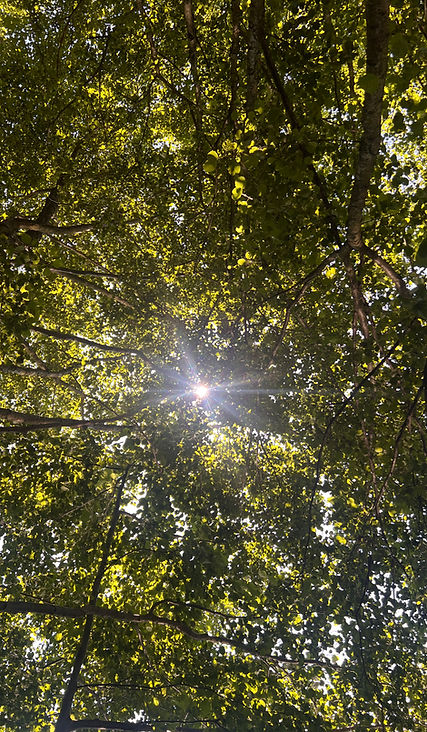
Hainich National Park – Ancient Beech Forests (World Heritage Site)
Hainich National Park is part of the UNESCO World Heritage Site "Ancient and Primeval Beech Forests of the Carpathians and Other Regions of Europe." Here, the forest is allowed to develop naturally – without human intervention. Visitors can experience a unique perspective on the primeval forests on the famous treetop walk, discover rare animal species such as wildcats and woodpeckers, and enjoy hiking and nature experiences at their best. Thus, Hainich not only protects valuable ecosystems but also provides an ideal place for relaxation and wonder.

The chancel of Erfurt Cathedral – a place of spiritual history
The magnificent sanctuary of Erfurt Cathedral impresses with its Gothic architecture, colorful stained-glass windows, and unique spiritual atmosphere. The cathedral itself dates back to its founding by the missionary Boniface in 742, making Erfurt an important center of Christian faith for over twelve centuries. To this day, the sanctuary reflects the cathedral's central role as the spiritual and cultural heart of the city.